Whitening
Changes the shade of natural teeth but not shape, position, gaps, or existing porcelain.

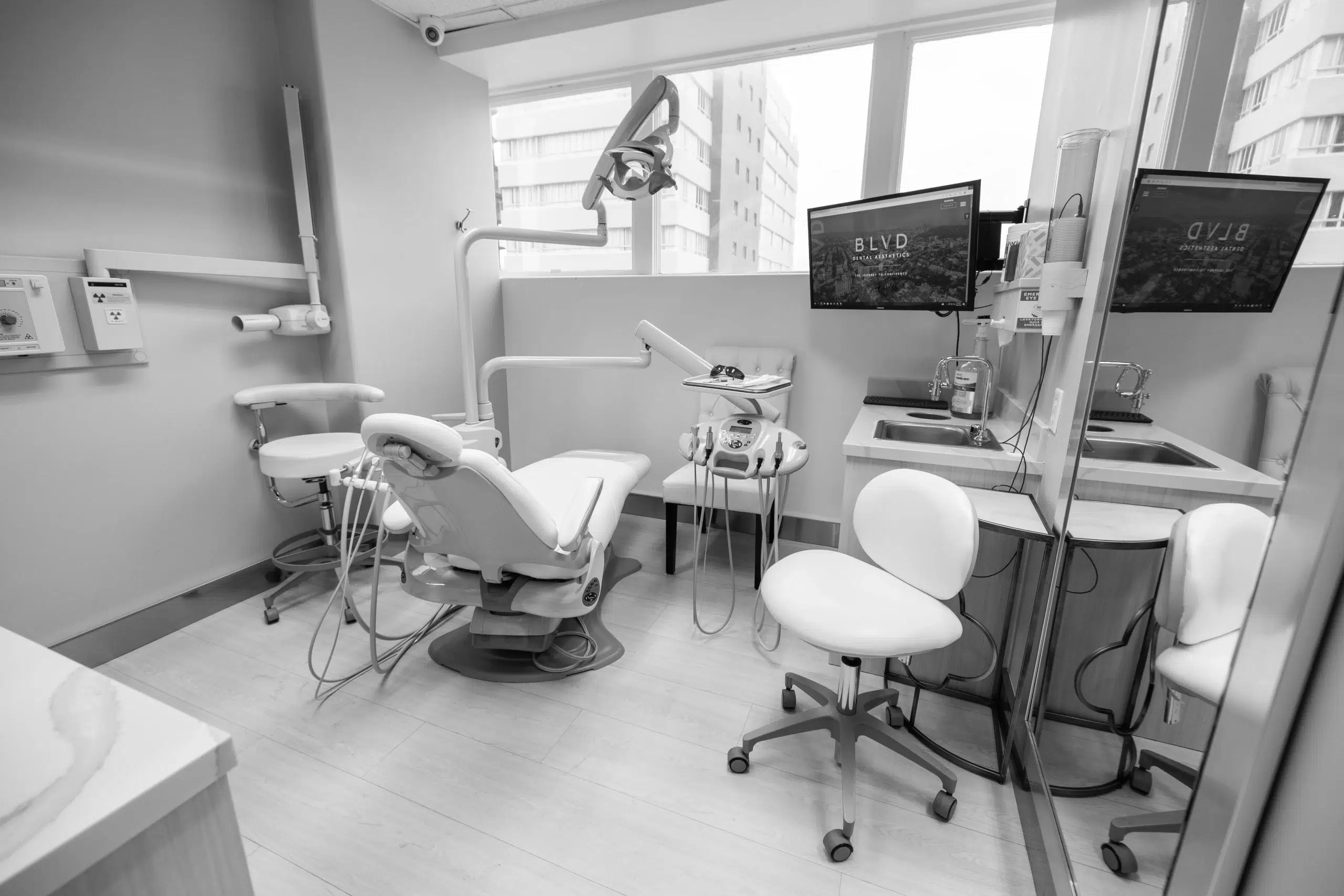
Porcelain veneers are thin, custom-made ceramic restorations bonded to the visible surfaces of selected teeth to change color, shape, proportion, spacing, or the appearance of chips and wear. Dr. Daniel Adelpour plans treatment around your teeth, bite, face, and goals—not a standardized veneer look. See real BLVD cases ranging from one difficult front-tooth match to four conservative veneers and a complete ten-veneer upper-smile transformation.
Porcelain veneers are thin, custom-made restorations bonded to the visible surfaces of selected teeth. They can change color, shape, proportion, spacing, and the appearance of selected chips or wear, but they are not the right answer for every cosmetic concern.
Healthy teeth need a durable cosmetic change that whitening, contouring, or limited bonding cannot predictably provide.
Active decay, gum disease, unstable bite problems, or other untreated conditions should be addressed before cosmetic veneer treatment.
Whitening, composite bonding, Invisalign or other orthodontics, crowns, gum treatment, or no treatment may preserve more tooth structure or better address the actual problem.
The best treatment depends on whether the underlying problem is color, tooth shape, position, missing enamel, or structural weakness. BLVD evaluates those causes before recommending porcelain.
Changes the shade of natural teeth but not shape, position, gaps, or existing porcelain.
Can repair selected chips, edges, or small spaces with a more conservative and repairable material, but it may stain or wear sooner.
Moves teeth and can improve bite relationships without changing enamel color or tooth shape.
Cover the front surface to change color and form. They commonly require enamel removal and are generally irreversible.
Cover the entire tooth and may be more appropriate when a tooth is structurally compromised, heavily restored, or root-canal treated.
The goal is not to give everyone the same smile. These cases show how treatment can range from four carefully blended front teeth to a complete upper-smile transformation.


Actual BLVD patient. Four porcelain veneers were designed to blend with the surrounding natural teeth. Results vary.
For a dark, damaged, or mismatched front tooth, shape and shade must work with the neighboring natural teeth.
Two to four veneers may improve selected front teeth while preserving the character of the surrounding smile.
Six to ten veneers may be considered when several visible teeth need coordinated changes in color, proportion, or symmetry.
BLVD works directly with an independently owned private dental laboratory across the street. When appropriate, patients—especially demanding single-front-tooth cases—may be able to meet with the laboratory for an in-person custom shade evaluation.
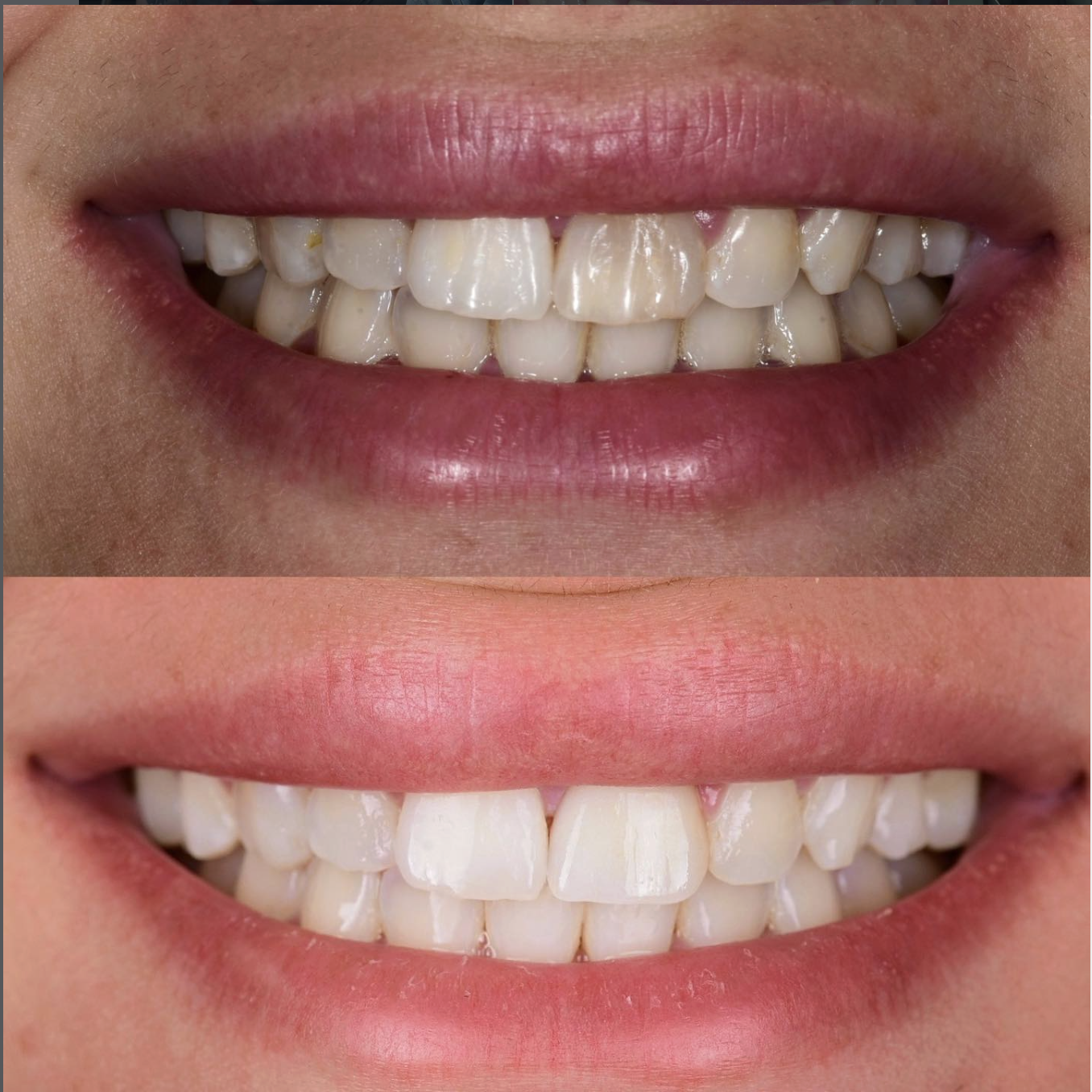
Actual BLVD patient treated with one veneer to match the surrounding smile.


Actual BLVD patient. Ten upper porcelain veneers. Results and treatment needs vary.
The best option depends on what you want to change, your existing enamel and bite, the number of teeth involved, and your expectations for appearance and maintenance.
Veneer regret commonly centers on a result that feels too white, too large, irreversible, or different from what the patient expected. These concerns should be discussed before any tooth is prepared.
Natural-looking veneers require enough space, individualized shape and texture, realistic shade selection, and attention to lips, face, and untreated teeth. No-prep treatment is not automatically more conservative if adding porcelain would create bulky contours.
Photography, scans, diagnostic planning, and—when appropriate—temporaries help evaluate length, proportion, speech, comfort, and appearance. A preview guides discussion but cannot reproduce every optical detail of final porcelain.
Some patients experience temporary hot-and-cold sensitivity after preparation or bonding. Persistent, worsening, spontaneous, or bite-related pain should be evaluated rather than assumed to be normal.
Natural tooth structure remains vulnerable to decay, especially around restoration margins. Daily brushing and cleaning between teeth, routine examinations, and attention to a loose or damaged veneer remain important.
A veneer may need rebonding, repair, or replacement. Avoid using veneered teeth as tools, report changes promptly, and follow any recommended protection for grinding or sports.
Porcelain can serve for many years, but no restoration is guaranteed for life. Because enamel is commonly removed, future repair or replacement should be part of the financial and clinical decision.
Dr. Adelpour evaluates tooth structure, existing restorations, gum health, bite forces, clenching or grinding, smile display, and the changes you want.
Clinical photography, digital scanning, and diagnostic planning help evaluate tooth proportions and how proposed changes relate to untreated teeth, lips, and face.
Traditional porcelain veneers usually require removal of some enamel. The amount varies by tooth and case. When appropriate, temporaries help assess shape, proportion, comfort, and appearance.
An independently owned laboratory fabricates the porcelain. BLVD can communicate directly with the nearby laboratory, and in-person custom shade evaluation may be available when appropriate.
Fit, shape, shade, and the relationship to neighboring teeth are checked before the veneers are bonded. Bite and contact adjustments are made as needed.
Routine examinations, cleanings, home care, and protection from damaging bite forces remain important. Veneers can chip, loosen, wear, or eventually require repair or replacement.
Most porcelain veneer treatment should be viewed as a long-term and generally irreversible decision because enamel is commonly removed. Minimal-preparation or no-preparation treatment is not appropriate for every tooth, and adding porcelain without adequate space can create bulky contours or compromise the result.
Your exact investment depends on the number of teeth, porcelain and laboratory requirements, shade complexity, preparation needs, and the overall treatment plan. After examining your smile and discussing your goals, BLVD provides a written plan with exact pricing.
CareCredit financing is available. Ask the BLVD team about current financing options and eligibility when reviewing your personalized treatment plan.
A single-tooth match is planned differently from an eight- or ten-tooth smile transformation.
For many cases, preparation and temporaries allow shape, proportion, and comfort to be evaluated before final delivery.
You will understand the recommended number of teeth and expected investment before deciding whether to proceed.
“Truly excellent with cosmetics and listens to my concerns, addresses them professionally, and is also just the kindest!”
— Jacey Bradley, five-star Google review

Dr. Adelpour combines cosmetic and restorative planning with clinical photography, digital scanning, and close laboratory communication. His goal is a result that fits the patient—not a standardized veneer look.
BLVD Dental Aesthetics
6360 Wilshire Boulevard, Unit 512
Los Angeles, CA 90048
Some patients need one or two veneers; others may consider four, six, eight, or ten depending on the teeth visible in the smile and the desired changes.
Natural appearance depends on proportion, texture, translucency, shade, and how the veneers relate to the lips, gums, face, and untreated teeth. Realistic planning and laboratory communication are central to the process.
Traditional porcelain veneers often require removal of some enamel and should be considered a long-term commitment. The amount of preparation varies by tooth and case.
Yes, single-tooth veneers may be appropriate, although matching one front tooth can be especially demanding. BLVD's nearby laboratory relationship can support in-person shade evaluation when appropriate.
Many full veneer cases involve two principal treatment visits: preparation with temporaries, followed by final delivery. Diagnostic and follow-up visits may also be needed.
There is no guaranteed lifespan. Material, preparation design, bonding, bite, grinding, hygiene, habits, and maintenance all matter. Published patient guidance commonly describes many years of service, but an individual veneer may chip, loosen, wear, or need replacement sooner or later.
Possibly, but bite forces and wear patterns must be evaluated. Grinding, clenching, or a deep overbite can increase risk, and a protective appliance or another treatment sequence may be recommended.
Traditional porcelain veneers commonly require removal of some enamel from the front and sides of a tooth. The amount depends on position, color, shape, material, and the desired result. No-prep or minimal-prep treatment is not appropriate for every patient.
Veneers are usually considered cosmetic and are commonly not covered unless a plan recognizes a medically necessary component. BLVD can help patients understand available benefit information, but verification is not a guarantee of payment.
They should not be designed as a generic white block. Tooth position, available space, enamel, facial proportions, lip movement, shade, texture, and the number of treated teeth all affect whether veneers can look natural. Minimal-prep or no-prep treatment is not suitable when it would create excessive contour.
Yes. A veneer covers only part of a natural tooth, and decay can still develop around or beneath a restoration. Brushing, cleaning between teeth, routine examinations, and prompt evaluation of a loose or damaged veneer remain important.
Temporary sensitivity to temperature can occur after preparation or bonding. Pain that is persistent, worsening, spontaneous, or triggered by biting should be evaluated.
Whitening does not change the shade of porcelain. When untreated natural teeth will remain visible, whitening may need to happen before the final veneer shade is selected.
Depending on the veneer and underlying tooth, it may need to be rebonded, repaired, or replaced. Contact the dentist promptly and avoid biting with the affected tooth until it is evaluated.
Consultation recommendations and any applicable fee are determined based on the case and the evaluation needed. Submit a request and the BLVD team will contact you about the appropriate next step.
Request a personalized veneer consultation to discuss the teeth you want to change, alternatives, expected process, and exact investment.