Yes—some patients can treat one front tooth with one veneer. The harder question is not whether a dentist can place a single veneer. It is whether that restoration can blend naturally with the teeth beside it while respecting the tooth underneath, the bite, and the patient’s long-term options.
A one-tooth case can be more visually demanding than treating several teeth because the neighboring natural tooth becomes the reference for every detail. Color matters, but so do brightness, translucency, shape, surface texture, gloss, and the way the tooth looks under different lighting.
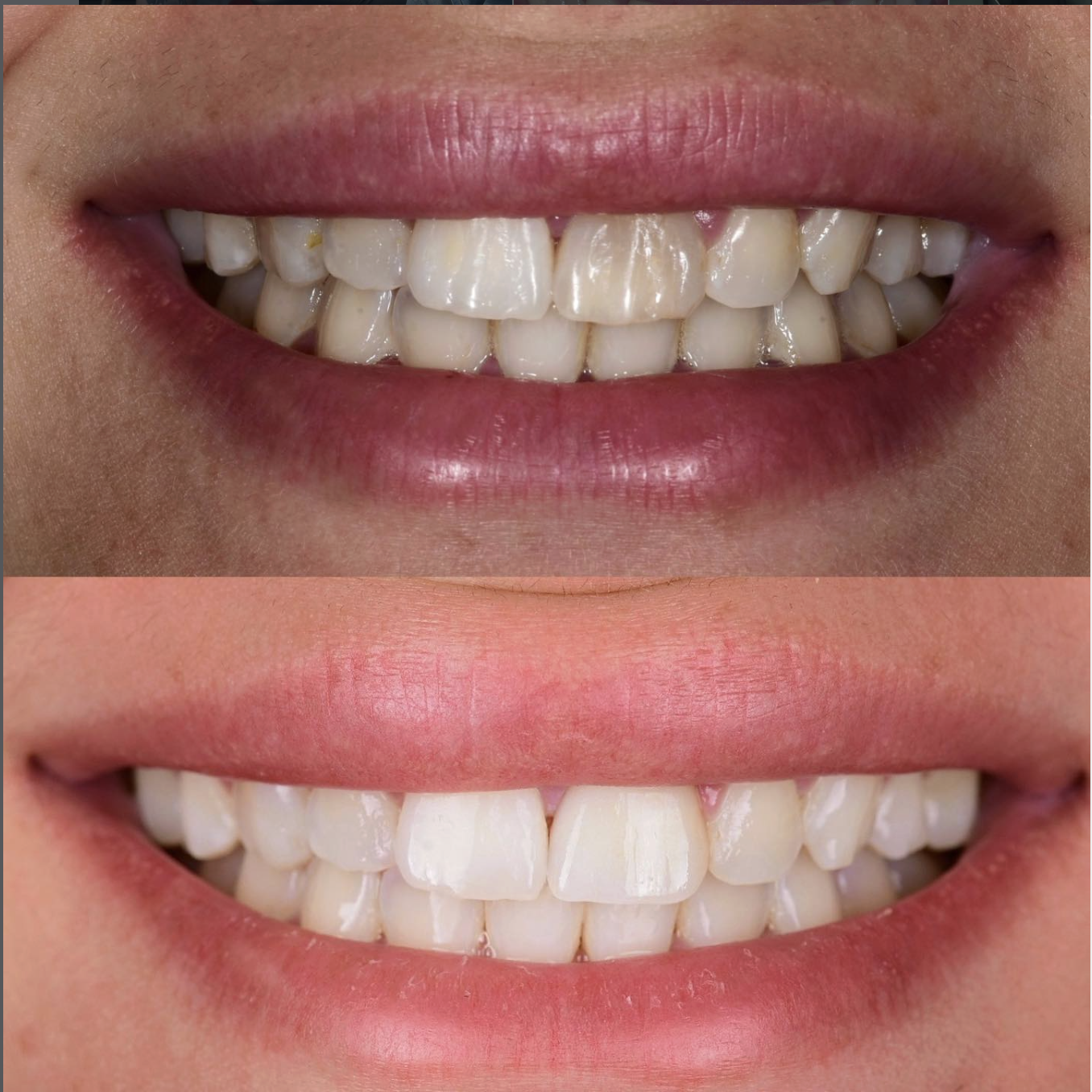
Can You Really Get a Veneer on Just One Front Tooth?
Potentially. A single veneer may be considered when one visible tooth differs in color, shape, size, surface, or proportion and the surrounding teeth do not need the same treatment. The decision begins with an examination—not a photograph alone.
The dentist needs to understand why the tooth looks different, how much healthy enamel remains, whether there is decay or a crack, how the tooth responds to testing, how the bite loads that tooth, and whether whitening, bonding, orthodontics, a crown, or no treatment would be more appropriate.
A veneer covers mainly the visible front surface of a tooth. A crown surrounds much more of the tooth. Those treatments are not interchangeable, and a dark tooth does not automatically need either one.
Why Matching One Front Tooth Is So Difficult
Brightness and color
A restoration can have a similar basic shade yet still look too bright, too gray, too yellow, or too opaque beside the natural tooth.
Translucency and opacity
Natural enamel transmits and reflects light in layers. The restoration must mask what needs to be masked without losing the depth of a natural tooth.
Shape and edge detail
Length, width, line angles, edge position, and tiny asymmetries influence whether the two front teeth appear related.
Texture and gloss
Surface texture changes how light reflects. A tooth that is too smooth or too glossy may stand out even when its color is close.
Research on ceramic veneers supports the importance of translucency, the underlying tooth color, ceramic selection, thickness, and cement opacity in the final appearance. Those variables are why a single-tooth match requires planning rather than simply selecting a shade tab.
What If the Tooth Underneath Is Very Dark?
A dark underlying tooth adds another layer to the plan. The restoration needs enough masking ability to control the darkness, but an overly opaque result can look flat beside natural enamel. The available tooth structure, preparation design, restorative material, and laboratory communication all influence that balance.
The cause of discoloration matters too. Surface stain, internal discoloration, an old restoration, decay, trauma, or changes inside the tooth can require different evaluation and treatment. A cosmetic covering should not be selected before disease or structural problems are addressed.
How a Dentist and Ceramist Plan the Match
A demanding one-tooth case may use clinical photographs, shade references, scans or impressions, and detailed notes about brightness, translucency, texture, and characterization. When appropriate, direct communication with the dental laboratory or an in-person shade evaluation can add information that a single photograph may miss.
At BLVD Dental Aesthetics, Dr. Daniel Adelpour can collaborate directly with a nearby independent partner dental laboratory, including in-person custom shade matching when appropriate. That does not guarantee a perfect match or mean every patient needs a laboratory visit; it gives the restorative team another planning option for a visually demanding case.
Could Whitening, Bonding, a Crown, or Orthodontics Be Better?
- Whitening: may help some natural-tooth discoloration, but the cause and response vary. Existing veneers, crowns, and bonding do not whiten like natural enamel. If whitening is planned, it is often considered before choosing the final restorative shade. Learn about professional whitening options.
- Composite bonding: may be considered for certain shape, edge, or color changes and is repaired differently from porcelain. It may not mask every dark tooth predictably. See how dentists compare bonding and veneers.
- A crown: may be more appropriate when the tooth needs broader structural coverage, but it removes and surrounds more tooth structure than a veneer. The examination determines whether that level of coverage is justified.
- Orthodontics: may be considered when position, spacing, rotation, or the bite is the main problem rather than the tooth’s surface alone.
- No treatment: is also a valid option when the tooth is healthy and the appearance does not bother the patient enough to justify an elective irreversible procedure.
Will One Veneer Look Completely Invisible?
No ethical dentist can guarantee that a restoration will be undetectable in every photograph, angle, and lighting condition. Natural teeth themselves change appearance with hydration, surroundings, and light. The goal is a harmonious result that the patient and clinical team find acceptable—not a promise of mathematical identity.
Some cases may require additional shade communication, laboratory adjustments, or a remake before final acceptance. A conservative plan also means resisting the idea that several healthy neighboring teeth must automatically be treated just to make one restoration easier.
What Should You Ask at a Consultation?
- Why is this tooth darker or different?
- Is the tooth healthy enough for a veneer?
- What alternatives could preserve more tooth structure?
- How will the underlying color be managed?
- How will shade, texture, translucency, shape, and gloss be communicated?
- Would whitening first change the final shade plan?
- What happens if the first laboratory result does not blend well enough?
- What maintenance, repair, or future replacement should I expect?
Frequently Asked Questions
Do I need veneers on both front teeth?
Not automatically. Treating one tooth may be reasonable when the neighboring tooth is healthy and acceptable. The ability to blend one restoration and the patient’s preferences guide the plan.
Can a veneer hide a very dark tooth?
Sometimes, but masking a dark foundation while preserving natural depth can be difficult. The cause, tooth structure, material, preparation, and laboratory plan must be evaluated.
Should I whiten before getting one veneer?
If you want the surrounding natural teeth lighter, whitening is commonly considered before the final shade is selected. Your dentist should plan the sequence because a finished veneer will not whiten like natural enamel.
Can a photo tell whether I need a veneer or crown?
No. A photo cannot show tooth vitality, decay, cracks, enamel availability, bite forces, or every structural issue needed for that decision.
Request a Conservative Veneer Evaluation in Los Angeles
If one front tooth looks dark, damaged, or different from the rest of your smile, BLVD can evaluate the reason, discuss conservative alternatives, and explain whether one veneer is a reasonable option. Visit the Los Angeles porcelain veneers page or call 310-620-8060.